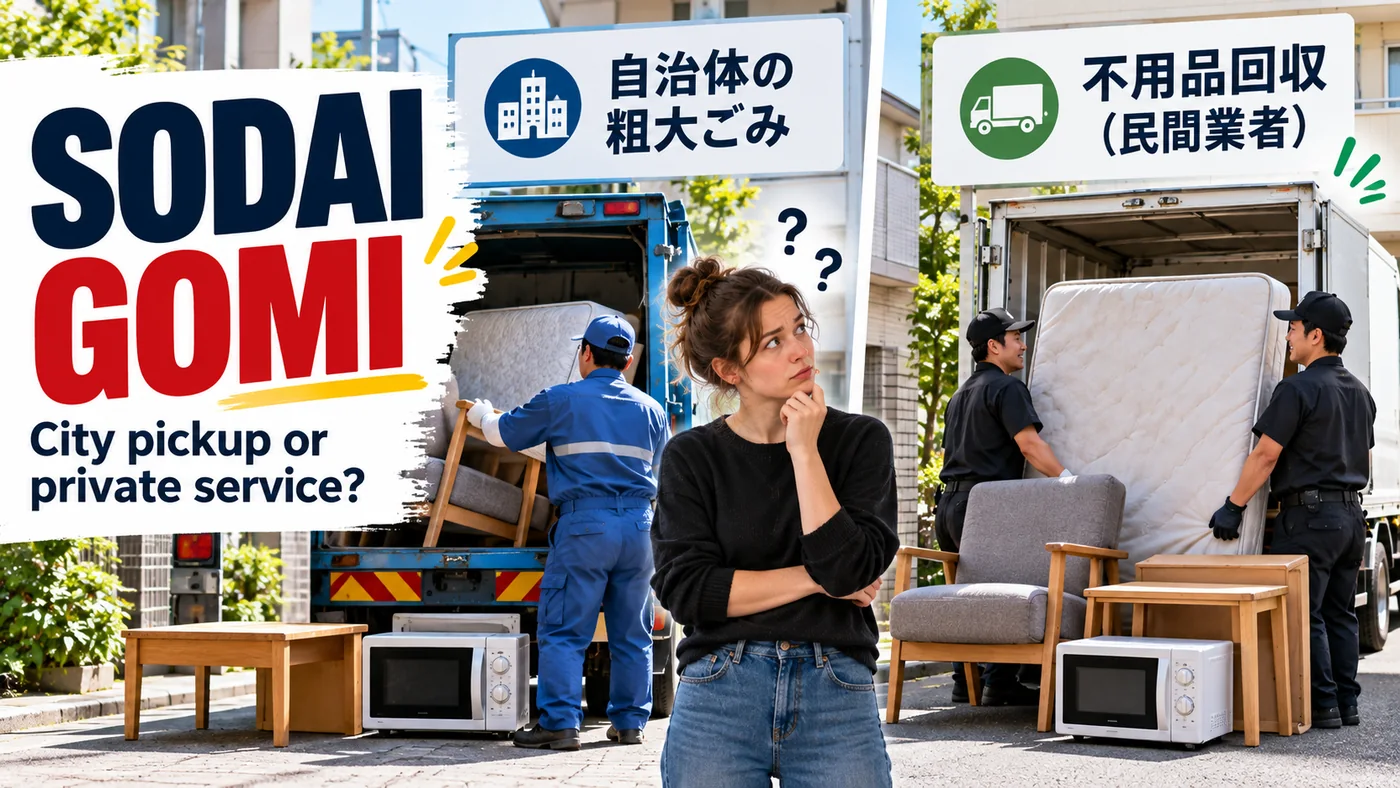
Sodai gomi is usually the first option to check for ordinary bulky furniture—but not automatically the best option when your move-out date is close. The right choice depends on the item, your city’s next collection slot, whether you can place it at the designated location, and whether the item is excluded from municipal bulky waste.
Municipal bulky waste is best when the calendar works
For ordinary large household items such as tables, shelves and some beds, municipal pickup can be predictable and low-cost. But the process is not “put it outside whenever you want.” You normally apply first, pay the required fee, label the item as instructed, and place it at the designated collection point on the specified day.
| Decision | Municipal sodai gomi | Paid private route |
|---|---|---|
| Best for | Ordinary bulky furniture when the city schedule fits | Urgent deadlines, multiple items, difficult carrying—if the legal collection route is verified |
| Timing | Fixed by city/ward schedule | Potentially more flexible |
| Cost | Usually item-based municipal fee | Varies by labor, volume, stairs, parking, disposal route and urgency |
| Fridge / washer / TV / AC | Typically excluded from ordinary bulky waste | Must still follow the appliance-recycling rules |
| Main risk | Missing the application deadline | Using an unlicensed collector or accepting an unclear quote |
Sapporo shows why “how many days left?” is the key question
Sapporo’s current bulky-waste page says applications are accepted from two weeks before the desired collection date. Collection weekdays and application deadlines differ by ward. For example, Central and Toyohira wards have Thursday collection with a Tuesday application deadline; Kita, Higashi, Nishi and Teine have Wednesday collection with a Monday deadline.
That makes the practical rule simple: check your ward’s next eligible collection date before doing anything else. If the date is after your room handover, the municipal option may be irrelevant even if it is cheaper.
Private pickup can solve timing—but only if the collection route is legitimate
Japan’s Ministry of the Environment specifically warns households not to use unlicensed waste collectors. The ministry notes that a secondhand-dealer license or an industrial-waste permit alone does not authorize household-waste collection.
When you request a quote, ask how the company is authorized to collect household waste in your municipality. A professional operator should be able to explain the legal route clearly.
[mjhr_moveout_pr]
Use a two-quote rule when time allows
Send the same information to two providers: photos, item list, sizes, floor/elevator, parking access, collection address and deadline. Ask for an all-in written estimate and what could make the price change on the day.
This avoids comparing one vague “from ¥X” advertisement with another company’s actual total.
Sodai gomi vs private pickup: quick answer
Enough time + ordinary furniture: start with municipal bulky waste.
Leaving before the city can collect: move to a verified legal paid route.
Fridge / washer / TV / air conditioner: follow the Home Appliance Recycling Law route instead of ordinary sodai gomi.
Unclear license or vague disposal explanation: do not hand over your household waste.
Check your move-out deadline and item type →
Official sources: Sapporo bulky-waste schedule and application · Osaka bulky-waste rules and exclusions · Ministry of the Environment warning on unlicensed collection