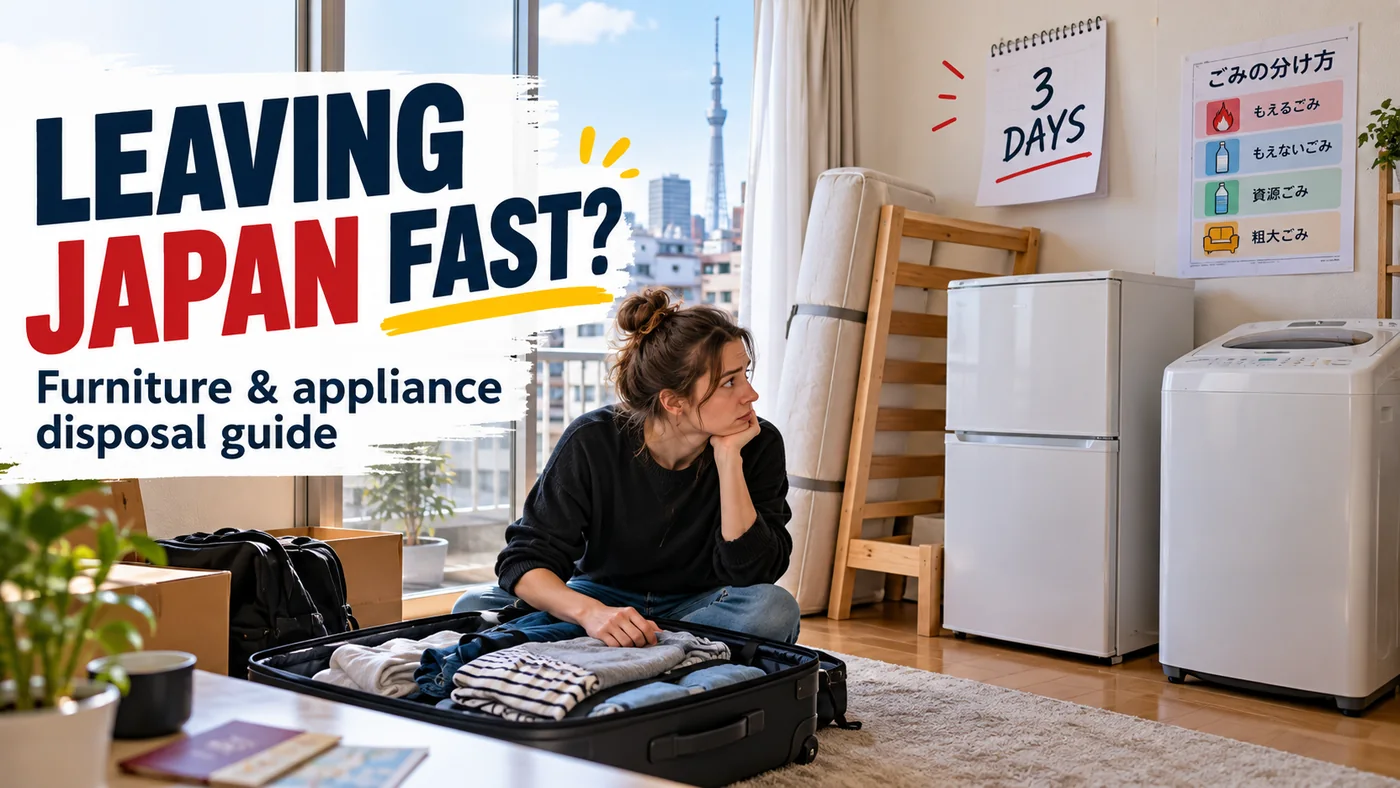
There is no single “sodai gomi rule” for all of Japan. The useful question is: what does your city accept, how early must you book, and does the next collection date happen before you hand over the room?
Start with your city
OsakaCollection can start from 3 days after booking, subject to availabilityOpen Osaka guide →
FukuokaOversized-trash pickup is generally scheduled within about a weekOpen Fukuoka guide →
NagoyaMonthly collection; definition changes from October 2026Open Nagoya guide →
The rule that does stay the same: four appliances are different
Air conditioners, televisions, refrigerators/freezers, and washing machines/clothes dryers are handled under Japan’s Home Appliance Recycling Law rather than ordinary bulky-waste pickup. If one of those is still in your room, split it from the furniture immediately.
Fridge and appliance disposal before move-out →
Why “I leave in three days” changes the answer
A low municipal fee is useful only when the municipal schedule still fits your room handover. Sapporo uses ward-specific collection days, Osaka publishes an earliest scheduling rule, Fukuoka says collection is generally within about one week after the request, and Nagoya collects large-sized garbage once a month. That timing difference is why a city-specific move-out page can be more useful than a generic “how to throw away furniture in Japan” article.
If city pickup will miss your deadline
Do not jump straight to the first English-language collector you find. Ask for a written total price, item list, collection date and the legal household-waste route. The Ministry of the Environment warns residents not to use unlicensed household-waste collectors.
Prepare a fast English pickup quote →
Official sources: Sapporo City · Osaka City · Fukuoka City · Nagoya City · METI Home Appliance Recycling Law guidance. Each city guide below links directly to the source used.